

“Intuition is the key to everything… it’s emotion and intellect joining together, then a knowingness occurs.” — David Lynch
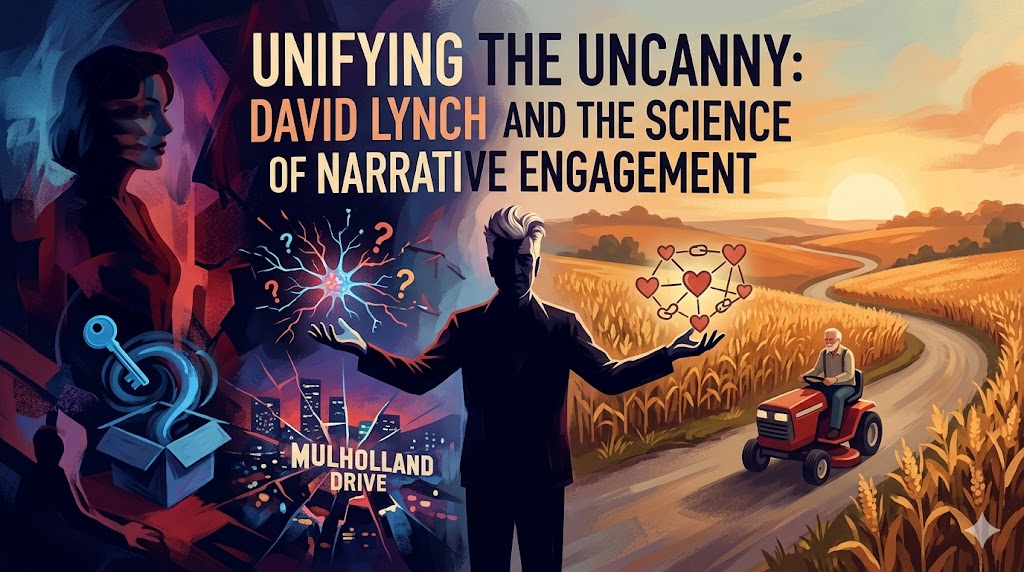
NOTE: This is the eleventh of many case studies from the Unified Theory of Narrative Engagement. Earlier essays discussing the theory at length can be found here.
David Lynch is often described as a filmmaker of enigmas — movies that challenge the viewer on multiple levels, his work embodying extremes. There’s Mulholland Drive (2001), a metaphysical mystery that takes its audience down a rabbit hole of fractured identity, dream logic, and ultimately dread.
Then, there is the Disney-made The Straight Story (1999), a road film devoid of big stakes and conflict in the vein of eastern Kishōtenketsu storytelling structure, focusing on reconciliation and grace instead.
At first glance, these works appear to be at opposite ends of the spectrum, one disorienting and surreal in its aesthetics, while the other is grounded in reality and achingly humane in its presentation. The spectrum, however, is an illusion, for these films, when seen through the lens of the Unified Theory of Narrative Engagement, have more in common than not, as the theory does not define by genre, tone, or realism, but rather by how stories regulate attention, emotion, and meaning through three forces that interact:
Anticipation (dopamine)
Connection (oxytocin)
Cognitive dissonance (tension)
When viewed through the theory, Mulholland Drive and The Straight Story demonstrate the same engagement machinations under the hood. While the result is the telling of different stories, he’s fundamentally exploring different outcomes of the same underlying process.
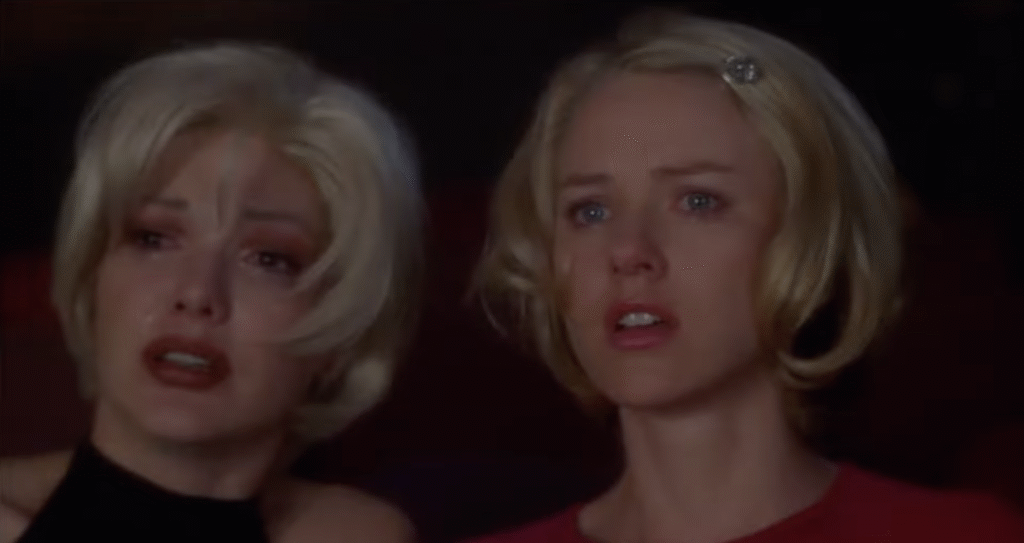
One of the criticisms Lynch’s films often face is that they’re manifestations of the protagonist’s damaged psyche as a literal projection. The Unified Theory, however, proposes “subjective realism” as a structural arrangement as opposed to a metaphysical claim, particularly with the cognitive and emotional state of the protagonist, without requiring the world to be “only in their head.”
In short, subjective realism is about the distribution of certainty within the narrative field as opposed to making a statement about reality.
With this in mind, Mulholland Drive delves into fragmentation, repression, and denial, whereas The Straight Story deals with endurance, in-the-moment presence and reconciliation. Both are experiential in their construction and intent, shaped to make the audience feel what the stories’ protagonists/main characters are navigating internally.
Arguably known most for his surreal imagery, Lynch deserves just as much acknowledgement for his prediction disruption. In storytelling, the brain attempts, on a consistent basis, provided the story warrants it, to predict what will happen next based on what has already happened. When those predictions fail, the audience experiences what is known as a reward prediction error, which may result in anxiety, fascination, relief, or awe, depending on the context of the event.
This is like having a nice surprise, occurring when the reward received is greater than expected. A negative prediction error, in contrast, is where the reward received is less than or absent compared to expectations. An example of this might be found in Toy Story 3, where Lotso the bear is given an empathetic backstory late in the film, setting up a redemption arc — only to have the filmmakers pull the rug out underneath the audience for a cheap bit of suspense.
In the end, a positive prediction error amplifies pursuit, whereas a negative prediction error reconfigures expectations.
In Mulholland Drive, Lynch imbues a constant positive prediction error, where identities shift without warning. As a result, causation and logic dissolve, which, in turn, forces the mysteries to multiply rather than resolve.
The viewer, anticipating clarity, instead receives conceptual collapse, resulting in dopamine activation without ever being satisfied. Meanwhile, cognitive dissonance builds, but never resolves, leading to dread rather than catharsis. Ultimately, Mulholland Drive sustains engagement by maintaining a high-dopamine, low-oxytocin, unresolved dissonance state.
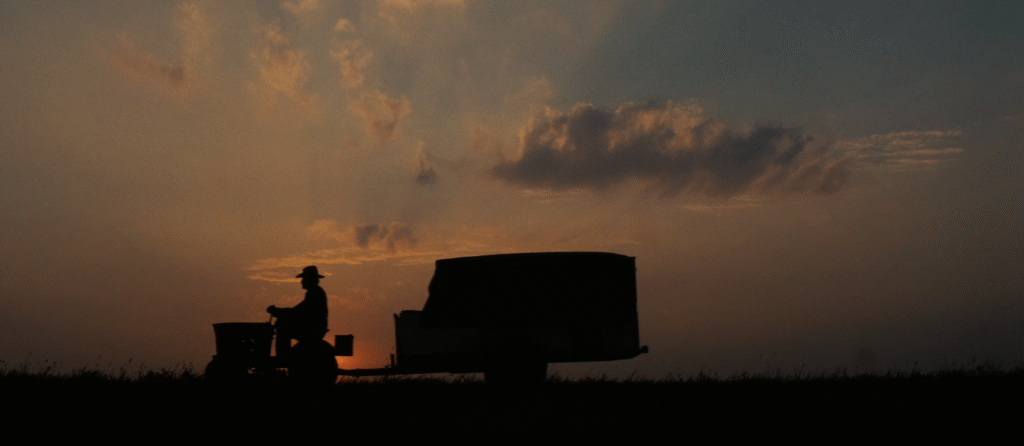
The Straight Story sees Lynch perform the inverse of Mulholland Drive, in that encounters that should provide a threat instead resolve into acts of kindness between quiet confessions. This creates a negative prediction error, where the anticipation of danger never arrives, and the resulting relief becomes an emotional reward instead. Oxytocin subtly overrides dopamine here, producing a sense of warmth and connection rather than tension and conflict.
Both films, then, engage the audience through prediction error with variances that end with opposite emotional charges. In The Straight Story, the result is integration, and in Mulholland Drive, it’s fragmentation.
Both films also introduce moments that disrupt their dominant emotional flow. In Mulholland Drive, small characters, seemingly detached from the narrative, like the man behind Winkie’s, function to disrupt as elements that never fall squarely in the realms of fantasy or reality, increasing the dissonance.
In The Straight Story, scenes including the “Deer Lady” or the veteran’s confession over a beer break the tranquility and calmness of the narrative and setting by introducing contradiction. These moments don’t exist as filler or noise, but as examples of the Unified Theory’s engine of engagement: dissonance. They structurally and cognitively force reassessment (recursion), deepen attention (engagement), and prevent emotional stagnation (oxytocin plateau and subsequent decay).
Dissonance is ultimately the mechanism that prevents engagement from collapsing into stasis.
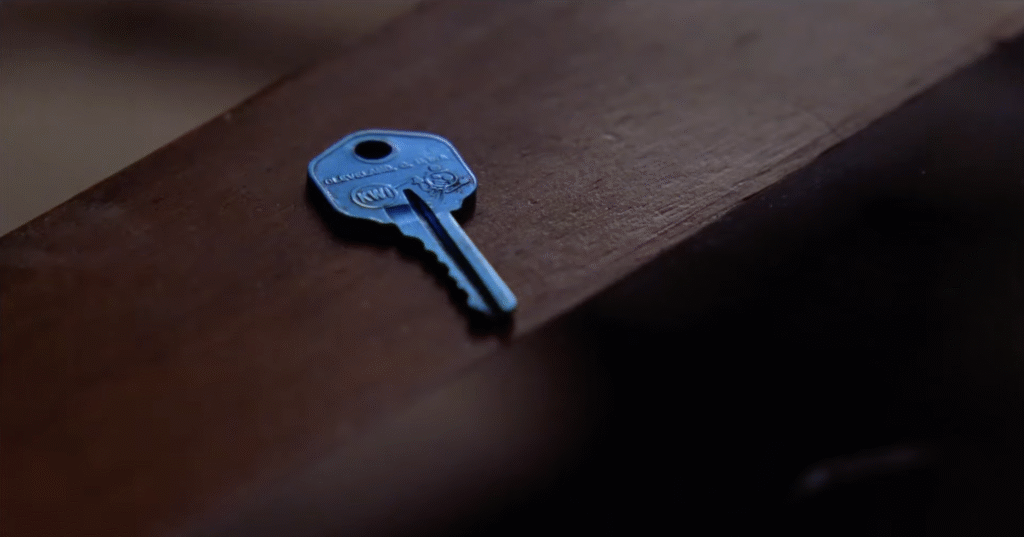
Both films exhibit a moment where avoidance becomes impossible, resulting in a change. In Mulholland Drive, the opening of the Blue Box collapses the fantasy structure. The emotional structuring falters as a result, and the narrative can no longer sustain coherence, increasing the dissonance.
In The Straight Story, Alvin’s confession of wartime guilt serves as a release, allowing the integration of trauma. It is the moment where internal contradiction becomes externalized, forcing the narrative to either integrate or collapse.
Between the two, Mulholland Drive denies that balance, whereas The Straight Story achieves it.
This comparison demonstrates a crucial claim of the Unified Theory: engagement doesn’t change across genre; rather, it’s the same structure and the same processes, working unseen underneath the Pirsigian hood. As a result, genre is aesthetic; engagement is systemic. Lynch’s cinema may be looked upon as “weird” and “normal,” but it is unified by a consistent manipulation of these unseen cognitive and emotional systems.
Below: Lynch sounds very Pirsigian in his approach to storytelling (paraphrasing: They tell me that Classicism and Romanticism swimming together create Dissonance Integrated, which leads to Quality).
If a single framework can account for both Mulholland Drive and The Straight Story, then its scope extends far beyond Lynch. Ultimately, as expressed through these numerous case studies, the Unified Theory is a theory of participation, delving into how stories engage the mind, bind emotion, and construct meaning over time.
Lynch simply makes those mechanisms visible, and, as I like to say with a nod to Pirsig, “The more you look, the more you see.”
NEXT: Part 8: The Story Architect’s Toolkit — Story as Biological Engagement, where we shift focus from the theoretical into the practical realm of application.