
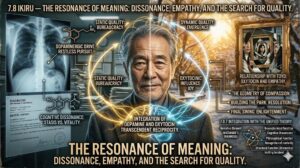
Part 7.8: Akira Kurosawa and the film Ikiru — The Resonance of Meaning: Dissonance, Empathy, and the Search for Quality
“I can’t afford to hate people. I don’t have that kind of time.” — Kanji Watanabe NOTE: This is the seventh of many case studies
“I can’t afford to hate people. I don’t have that kind of time.” — Kanji Watanabe NOTE: This is the seventh of many case studies

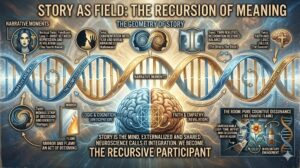
7.7 Story as Field: The Recursion of Meaning Across The Fourth House, Halloween, Vertigo, The Other, The Others, The Exorcist, and Tootsie, one truth stands

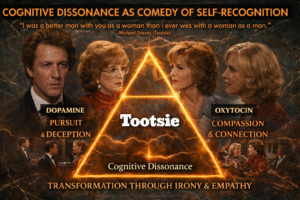
“I was a better man with you as a woman than I ever was with a woman as a man.”— Michael Dorsey (Tootsie, 1982) NOTE:

Part 7.5: The Exorcist — Faith and the Feedback Loop In the previous segment, Part 7.4, The Other and The Others externalize inner division; here,

NOTE: This is the fourth of many case studies on the Unified Theory of Narrative Engagement, with emphasis on how it came to be. Earlier

NOTE: This is the third of many case studies on the Unified Theory of Narrative Engagement, with emphasis on how it came to be. Earlier

“It’s the boogeyman.”— Laurie Strode, Halloween (1978) Note: This is the second in many case studies on the Unified Theory of Narrative Engagement. Earlier essays

“The more you look, the more you see.” —Robert M. Pirsig, Zen and the Art of Motorcycle Maintenance. Note: This is the first in many case

“A person isn’t considered insane if there are a number of people who believe the same way. Insanity isn’t supposed to be a communicable disease.