

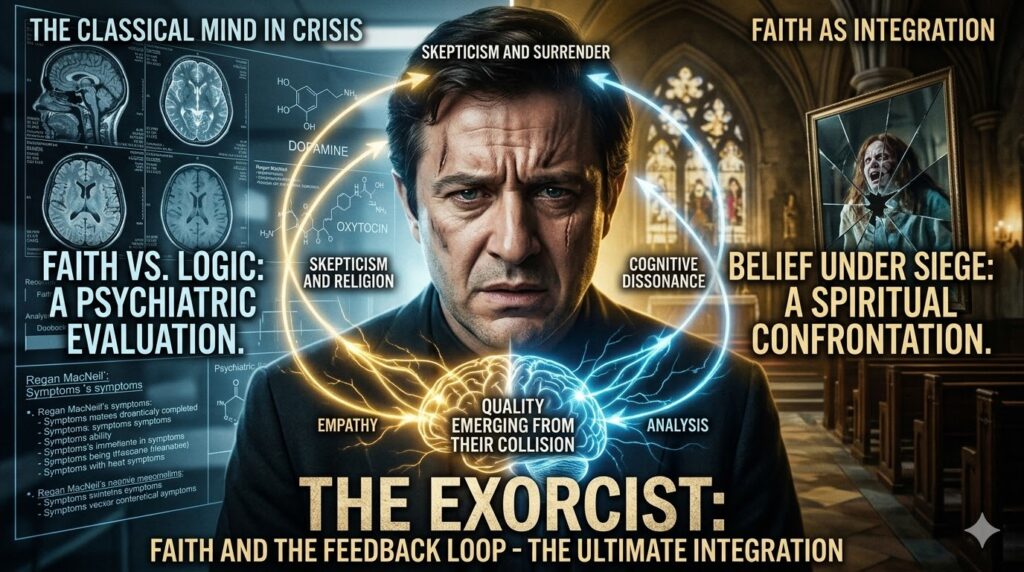
In the previous segment, Part 7.4, The Other and The Others externalize inner division; here, The Exorcist fuses it back into a single confrontation, pushing one man to the edge: the mind at war with its own loss of faith. William Friedkin’s 1973 masterpiece is often viewed as a story about possession. That’s a rather simplistic approach that focuses on its plot (classicism).
Its plot, however, exists to present belief and faith under siege, both psychologically and spiritually. Beneath its surface terror of demonic possession lies a structural and chemical precision: a recursive feedback loop between logic and faith, skepticism and surrender, dopamine and oxytocin, and religion and science; after all, Father Damien Karras is a man who straddles both worlds.
The Classical Mind in Crisis
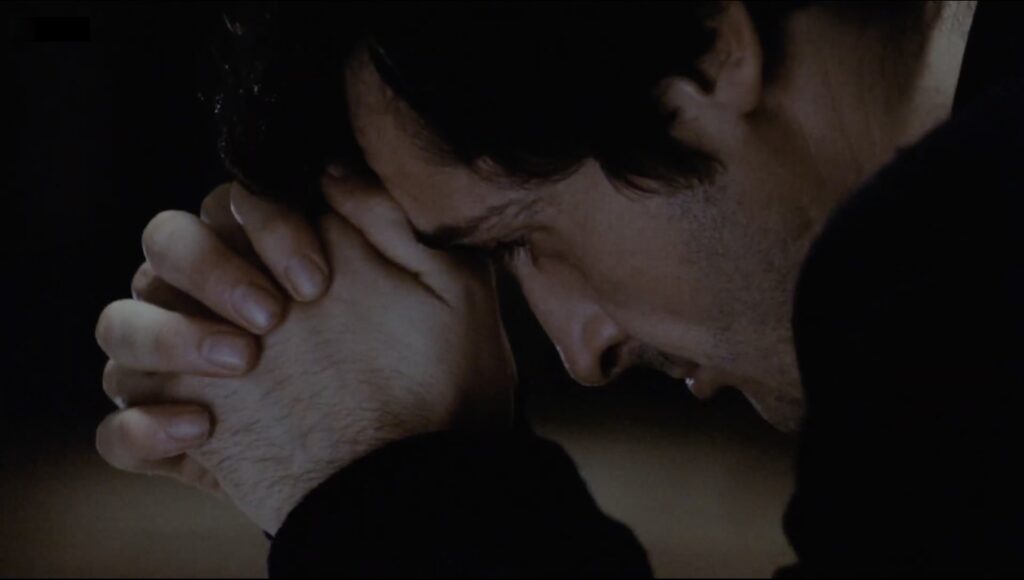
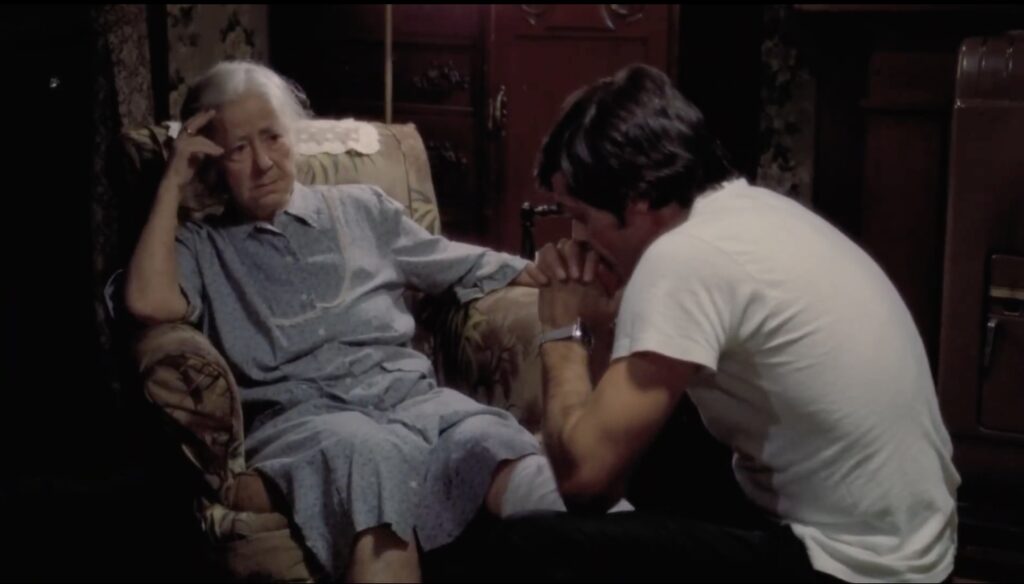
Karras embodies the classicist archetype in the Pirsigian sense: analytical, skeptical, and committed to system and method. As a Jesuit psychiatrist, he views faith as a hypothesis and doubt as evidence in his quest to diagnose and restore “order.” His professional identity depends on rational interpretation and the dopaminergic drive to resolve uncertainty and restore predictive order. However, when his mother dies, his system fractures and breaks down, and that which once balanced meaning (oxytocin) with mastery (dopamine) begins to falter as a result.
When he first encounters Regan MacNeil’s inexplicable symptoms, Karras eschews his role as a priest for that of a psychologist. His training demands diagnosis, differential, and causality, yet every rational test fails, deepening the dissonance between the world as he understands it and the reality unfolding before him. The more he pursues a rational explanation, the more reality resists him. This marks the first turn of the faith feedback loop: the classicist’s descent into cognitive dissonance.
Cognitive Dissonance as the Crucible of Faith
What begins as disbelief metastasizes into self-doubt. Each manifestation of Regan’s torment erodes Karras’s scientific certainty, forcing him to entertain what his intellect rejects. His inner voice becomes the battlefield, a recursive dialogue between belief and skepticism firing in alternating bursts.
This is an important part of the story, where “symptoms” are explored and misdiagnosed, an issue that was discussed in a previous 2014 essay here, which, incidentally, is titled Zen and the Art of Exorcising Bad Story Analysis. In that essay, failing to understand who the main character of the story is leads to, well, bad analysis that ignores a good portion of its telling.
The uncertainty of the root of Regan’s problem creates the tension between dopamine and oxytocin at its most volatile. Dopamine’s drive for coherence pushes Father Karras toward investigation, but every unanswered question amplifies discomfort. Meanwhile, oxytocin’s longing for connection, expressed with his guilt over his mother’s death and his empathy for Regan’s suffering, draws him back toward faith. Caught between them, Karras becomes a self-contained experiment in dissonance: the human brain searching for equilibrium between the measurable and the miraculous.
Faith as Integration, Not Surrender
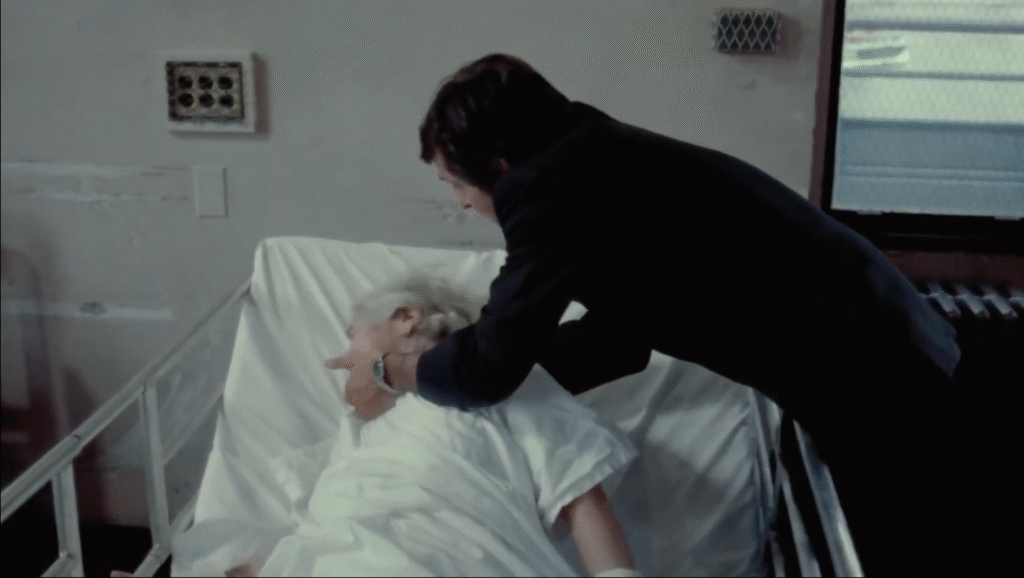
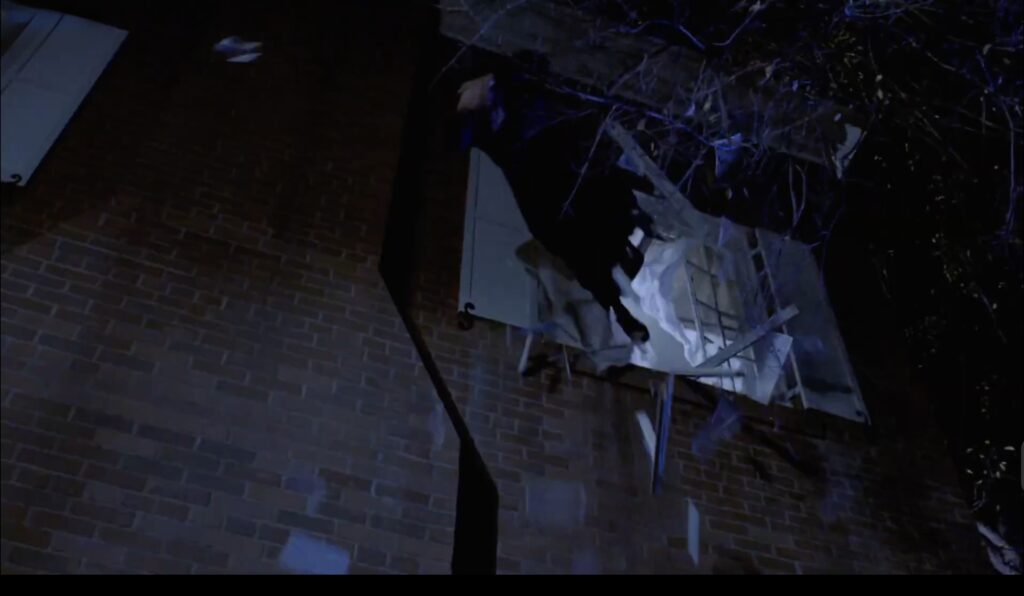
The film’s resolution, the climactic invitation “Take me!” is often read as a sacrifice, but structurally (and neurologically) it is an act of integration. Father Karras’s act is not blind, though it appears as a leap of faith; it is cognitive reconciliation. He accepts the paradox his intellect could not tolerate: that good and evil, along with belief and reason coexist within the same field of truth. His leap from the window is both literal and symbolic, a transition from dissonance to unity, and from analysis to empathy — but to do that, he must first confront the demon within himself: doubt.
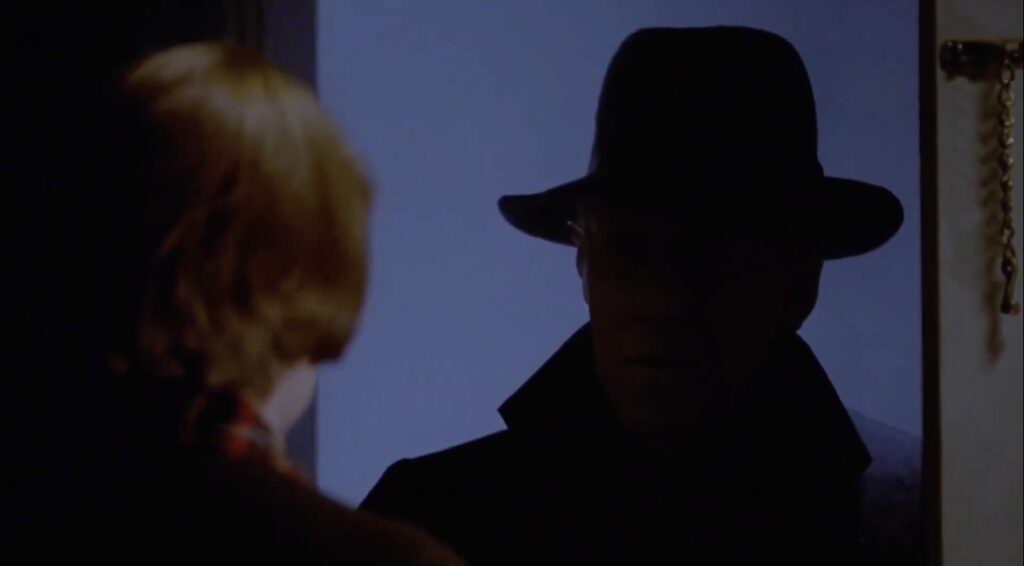
It is here that we realize The Exorcist shares an important structural kinship with The Babadook, in that the external demon becomes the dramatic manifestation of an internal crisis. Just as the titular figure in The Babadook takes on the form of the deceased husband, Pazuzu mimics Father Karras’s deceased mother in a targeted psychological assault.
Karras finally stops trying to categorize the horror (Classic/Dopamine) rationally and instead embraces the empathetic connection he had resisted (Romantic/Oxytocin). His final act becomes the outward expression of an inner reconciliation, the moment when the dissonance between skepticism and faith finally resolves.
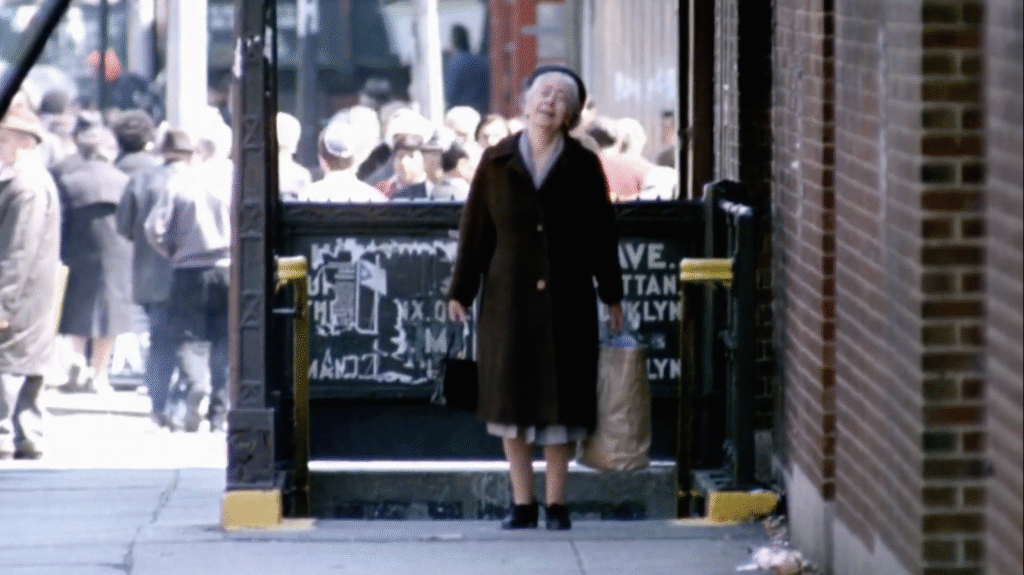
In this sense, Karras’s arc moves toward the integration Zen and the Art of Motorcycle Maintenance describes when Dynamic Quality breaks through static patterns: a shift from divided perception toward fluid awareness. It is the same loop traversed by Sunny in The Fourth House, by Scottie in Vertigo, by Grace in The Others, and by Amelia in The Babadook, where the mind confronts its own division and reunites itself through recognition — though always at a cost, the moment when something once unseen can no longer be ignored.
While Karras moves from doubt toward belief, Chris MacNeil travels the opposite path. Her faith in medicine, psychology, and institutional authority collapses one by one until the Church, once unthinkable, becomes her final recourse. The film thus constructs a mirrored convergence: science arriving at faith just as faith rediscovers conviction.
This convergence is reinforced by the film’s investigative structure, which mirrors the scientific method itself. Each diagnostic explanation for Regan’s suffering — behavioral, psychological, neurological, and medical — is tested and systematically eliminated. The exorcism therefore does not appear as an arbitrary supernatural solution; it emerges as the final hypothesis remaining after every other explanation fails. In this way, The Exorcist sustains engagement through a recursive diagnostic ladder, each failure intensifying the dissonance between belief and disbelief until the mind can no longer easily dismiss the impossible.
The Audience as Witness and Participant
What makes The Exorcist transcend genre is that it implicates the viewer in Father Karras’s crisis. We, too, are caught in the loop, our rational minds rejecting the supernatural while our emotional centers are pulled toward the possibility of it. As each rational framework collapses, the audience’s predictive model fractures alongside Father Karras’s own. Each scene tightens this feedback, producing alternating surges of dopamine-driven tension and oxytocin-driven empathy. The result is neither simple fear nor catharsis, but a psychophysiological reckoning: we experience dissonance as both suspense and faith.
Friedkin sustains this feedback through the rhythmic alternation of storyweaving. Scenes of investigation and diagnosis activate the viewer’s dopaminergic drive to resolve uncertainty: doctors probe, priests question, and Karras searches for explanations. These sequences are repeatedly interrupted by intimate moments of vulnerability — Chris’s fear for her daughter, Karras’s grief over his mother, quiet scenes of loneliness and guilt — that activate empathetic engagement. The film thus oscillates between analysis and compassion, between pursuit and attachment. By the time the exorcism begins, both systems have reached their peak: the mind demands explanation while the heart demands relief. The convergence of these drives produces the overwhelming intensity for which the film remains famous.
This is why the film endures long after the shock wears off. Our uncertainty is never fully resolved, teaching us to live within it (and integrate it). To “believe” in The Exorcist does not necessarily mean accepting its theology, but recognizing the mind’s need to reconcile logic with longing, and accepting that mystery itself is part of meaning.
The Feedback Loop of Faith and Story
In the broader context of the Unified Theory of Narrative Engagement, The Exorcist stands as the perfect demonstration of the recursive model: a narrative organism whose tension is sustained by chemical opposition and resolved through integration. Its power ultimately lies not in its demon, Pazuzu, but in its dialogue: the ongoing feedback between the hemispheres of mind and meaning.
As Pirsig might phrase it: the story is not about faith defeating doubt, but about Quality emerging from their collision. In Father Karras’s final act, cognition and compassion meet while dopamine and oxytocin harmonize, and thus the loop closes.
And yet, for the audience, the recursion continues because the film’s final question remains unanswered: Would I have done the same? That flicker of doubt, that inward confrontation, is the afterimage of true narrative Quality as an awakening that transcends horror.
In the end, the demon in The Exorcist is not merely expelled — it is recognized. And in stories, as in life, that moment of recognition is often the first step toward transformation… even if it requires becoming someone else to see the truth.
NEXT: 7.6 Tootsie — Cognitive Dissonance as Comedy of Self-Recognition.