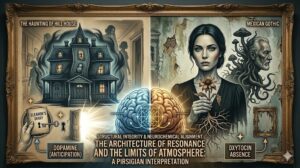


Part 9: The Mirror Principle — Story as Self-Reflection
Part 9.0: The Mirror Principle — Story as Self-Reflection The mirror principle can be described as every story being a mirror, whether it’s reflecting the

Part 9.0: The Mirror Principle — Story as Self-Reflection The mirror principle can be described as every story being a mirror, whether it’s reflecting the

“Quality is not a thing. It is an event.” — Robert Pirsig 8.0 The Story Architect’s Toolkit: A Practical Guide to Biological Engagement In the preceding

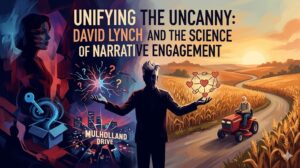
“Intuition is the key to everything… it’s emotion and intellect joining together, then a knowingness occurs.” — David Lynch NOTE: This is the eleventh of

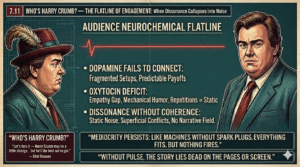
“Let’s face it — Harry Crumb may be a little strange… but he’s the best we’ve got.” — Eliot Draisen NOTE: This is the tenth

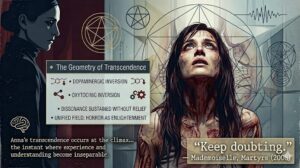
“Keep doubting.” — Mademoiselle, Martyrs (2008) NOTE: This is the ninth of many case studies on the Unified Theory of Narrative Engagement. Earlier essays discussing

“No live organism can continue for long to exist sanely under conditions of absolute reality.”— Shirley Jackson, The Haunting of Hill House NOTE: This is

“I can’t afford to hate people. I don’t have that kind of time.” — Kanji Watanabe NOTE: This is the seventh of many case studies

7.7 Story as Field: The Recursion of Meaning Across The Fourth House, Halloween, Vertigo, The Other, The Others, The Exorcist, and Tootsie, one truth stands

“I was a better man with you as a woman than I ever was with a woman as a man.”— Michael Dorsey (Tootsie, 1982) NOTE: